BIC event explores future of AU–EU Partnership, highlighting agency, participation and shared prosperity





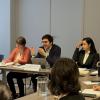

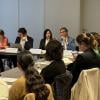




“Ambitions for the Next 25: Towards Agency, Participation and Shared Prosperity for All in the African Union (AU)–European Union (EU) Partnership,” an event hosted in February 2026 by the Bahá’í International Community’s (BIC) Addis Ababa and Brussels offices, examined how a broader understanding of development—which recognises every nation’s role in shaping a peaceful and prosperous global society—can be reflected in the Partnership’s policies and practices.
The space also explored social progress and the role of regular, joint consultation between institutions and local populations to ensure that the perspectives and aspirations of those most affected by the Partnership's policies remain central.
The event built on the outcomes of the 7th AU–EU Summit held in Angola, last November, and brought together over 50 people in Addis Ababa, Brussels, and online, including representatives from AU and EU institutions, civil society organisations and think tanks. Reflecting on the Joint Declaration, which came from the Summit, was also key to the discussion.
Alessandro Benedetti, Representative of the BIC’s Brussels Office, expressed that the interdependence of the two regions should be the starting point of all collective plans. He said, “the well-being, peace and prosperity of one continent is dependent on and inevitably bound up with that of the other.”
Former vice-president of the Seychelles, Ambassador Vincent Meriton, drew on his experience as chair of a Seychelles government initiative that engaged over 5,000 citizens in more than 50 island-wide sessions to address the root causes of various social challenges. He urged the AU–EU Partnership to adopt a mode of consultation between institutions and communities that is responsive to the voices of all.
Mr. Meriton said, “If development is designed far from the people it affects, it struggles” to address the root causes of social issues. “If success is measured only by funds disbursed rather than lives improved, partnership feels hollow.”
Building on these perspectives, Ambassador Salah Hammad and Ms. Lucia Alfano from the AU and EU Commissions, respectively, said the Partnership should center on the needs and aspirations of the almost two billion inhabitants of both continents. Ms. Alfano emphasized the importance of shaping the partnership around a model that is “widely inclusive, transparent, and participative.”
Mr. Asad Beg, from the European External Action Service, noting that the 7th AU–EU Summit acknowledged a shared past between the two continents marked by injustices, said, “We have to move away from the donor-recipient logic.”
Hon. Massamba Dieng, a member of the Senegalese Parliament and the Pan-African Parliament, highlighted the need for joint consultation so that the priorities of the Partnership respond to the needs at the grassroots. He described the recent interparliamentary dialogues, which brought together members of African national parliaments and the Pan-African Parliament, as representing “progress in strategic cooperation and strengthened consultation.”
Broader reflections on how each continent can appreciate the perspectives of the other were shared by Ms. Paddy Siyanga Knudsen of the African Non-State Actors Platform on Migration and Development. “There are a lot of assumptions on either side of the table about who we are,” she said, adding that a deeper understanding of one another, and of each continent’s structural realities, can better inform ongoing relationships.
The Summit’s Joint Declaration welcomed and encouraged civil society’s contributions to the Partnership. Ms. Karine Sohet, from ACT Alliance EU, spoke about the Civil Society Engagement Platform (CSEP), of which the BIC is a member, noting that it stands as an example of how civil society from both continents has been able to organize itself, and engage in genuine dialogue.
She said, “This platform, now composed of around 400 individuals and over 200 organizations, works to make civil society participation in the EU-Africa Partnership more structured, ongoing, and meaningful. It is an inclusive and autonomous platform based on shared principles.”
Reflecting on the experience of the global Bahá’í community’s efforts to bring about meaningful social change at the grassroots, Ms. Shemona Moonilal, Representative of the BIC’s Addis Ababa Office, explained that Bahá’í communities are working to “cultivate the ability to analyse social realities, to make meaningful decisions based on this analysis, and to apply universal principles to the practical challenges facing our society today, with the primary aim of promoting the well-being and participation of all.”
Earlier this year, the BIC also published a statement addressed to the African and European Heads of State and Government gathered at the 7th AU–EU Summit, calling for candid reflection on the future of the African–European partnership.