“Empowering Voices: Addressing Hate Speech” a second roundtable on social cohesion in Yemen hosted by the BIC Brussels and Yemeni Baha’is


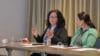


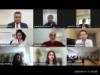
”In a country of diverse landscapes and populations, it is important to debate [the question of social inclusion and hate speech], so that we can set up, in the future, a democratic order which is inclusive of all compatriots without any exceptions” highlighted H.E. Mr Taha Mustafa, Ambassador of Yemen to Belgium in a roundtable titled “Empowering Voices: Addressing Hate Speech,” hosted by the Baha’i International Community Brussels office in collaboration with the Office of Public Affairs of the Baha’is of Yemen. On that occasion, participants explored strategies to counteract hate speech and enhance community integration.
This second roundtable of a series aimed at promoting social cohesion and diversity in Yemen gathered diplomats, Yemeni and European civil society, journalists and activists in a conversation on the present and future of Yemen.
“Women, girls, young people, but obviously all citizens of Yemen should be included in one way or another in this work towards peace,” said H.E. Jeannette Seppen, Ambassador of the Netherlands to Yemen. She reiterated that freedom of religion or belief and combating hate speech remain top priorities on the Netherlands' agenda.
In his opening remarks, Nader Al-Sakkaf from the Office of Public Affairs of the Baha’is in Yemen addressed how media, religious discourse and education can either promote an inclusive environment or perpetuate hate speech dynamics.
The need for “greater coordination and networking between those working to combat hate speech and those working on peacebuilding” has also been highlighted by Abdul Razzaq Al-Azazi, from the Electronic Organisation for Humanitarian Media while, Badr Al-Qahtani, journalist at Asharq Alawsat emphasised on the importance of “meeting and talking with journalists about this important topic.”
Participants highlighted the key role some actors play in countering hate speech. Huda Alasrari, from the the Defense Foundation for Rights and Freedoms, talked about the responsibility of social, political and tribal leaders, and Kishan Manocha, from the Organization for Security and Co-operation in Europe (OSCE) Office for Democratic Institutions and Human Rights (ODIHR), looked into the role religious leaders can play in this regard.
Dr. Manocha also discussed the feedback loop between social cohesion and hate speech, saying it was important not only to respond to hate speech, but “it is even more important to prevent it.” Efforts should “address the conditions that allow for flourishing and inclusive societies, peaceful cohesive societies, where cohesion is not just an empty word but has real meaning for everyone, this in turn combats hate speech,” he added
On the role of education in presenting a more complete and inclusive vision of Yemeni society, to counter hate speech, Mohammed Al-Shuwaiter, from the Arabic Human Rights Platform Qanun said that “the context given to university students should encourage and instigate new cultural questioning that reflects the diverse reality of Yemeni territory.”
“How is diversity managed for the painting to be completed?”, asked Al-Shuwaiter, adding that “the only way for the painting to be completed is to include various colours, shapes and other elements to present a different type of canvas.”