Social Cohesion at Heart of BIC Engagement at CSocD




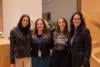


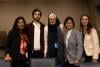
The 63rd Session of the Commission for Social Development provided a pivotal moment to both take stock of the lessons learned since the first World Summit for Social Development, held in Copenhagen in 1995, and to plan toward a follow-up Second World Summit to be held this November in Doha, Qatar.
“The deteriorating state of the world today has deepened the gap between extreme wealth and poverty, has left growing numbers without a livelihood that can allow them to live a dignified existence and contribute to the upliftment of their societies, and has fuelled greater degrees of mistrust and conflict,” said Representative Cecilia Schirmeister, who led the Baha’i International Community’s delegation to the Commission, which concluded last week.
“Yet the moment is one not only of tremendous crisis, but also of significant opportunity,” Ms. Schirmeister continued. “Today, it is increasingly recognized that humanity is interconnected and interdependent, on unprecedented scales. This can be a profound source of strength, as long as the community of nations is able to embrace that spirit of solidarity that gave birth to the Copenhagen Declaration on Sustainable Development.”
The BIC’s engagement centered on the elements of “strengthening solidarity, social inclusion and social cohesion” highlighted in the Commission’s priority theme.
The BIC’s statement to the Commission, titled “Strengthening Solidarity: Social Cohesion as a Driver of Development,” explored how and why the roots of numerous global challenges lie in how human beings view, value, respond to, and relate to one another.
“An essential need before the international community … is to deepen understanding of the process by which the relationships underlying the social fabric can be strengthened—and how such strengthening can assist a community to measurably improve its material and economic circumstances,” the statement says.
The BIC hosted an event parallel to the Commission that explored similar themes through a moderated panel discussion that included representatives from Member States, UN agencies, and civil society.
“Social cohesion relies on trust, inclusion, collaboration, and shared responsibility. It is not merely an economic objective, but a moral and human imperative,” said Ambassador Zéphyrin Maniratanga, of Burundi, in his opening remarks. “Economic growth alone is not enough to create a just and equitable society.”
Ms. Neda Badiee Soto, a BIC delegate from the Canary Islands, described local-level initiatives that have succeeded in fostering several hundred ongoing community-building initiatives across several neighborhoods involving some 4,000 participants.
“The community-building process promoted in the Canary Islands, based on the principles and teachings of the Baha’i Faith, seeks to promote regular spaces for training and consultation where people’s skills and talents are developed and placed at the service of the community,” Ms. Soto said.
Over the course of the Commission, Ms. Schirmeister served in a variety of official capacities in connection with her service as a member of the NGO Committee for Social Development Executive team, and as Chair of its subcommittee on the Second World Summit for Social Development.
“The Second World Summit for Social Development can be an invaluable moment for the nations of the world to collectively reflect on how our conception of a strong and prospering nation might be different today as compared to thirty years ago, and how our approaches to development will need to reflect that evolving understanding,” Ms. Schirmeister said.