The Ocean of UNGA 80
By Daniel Perell
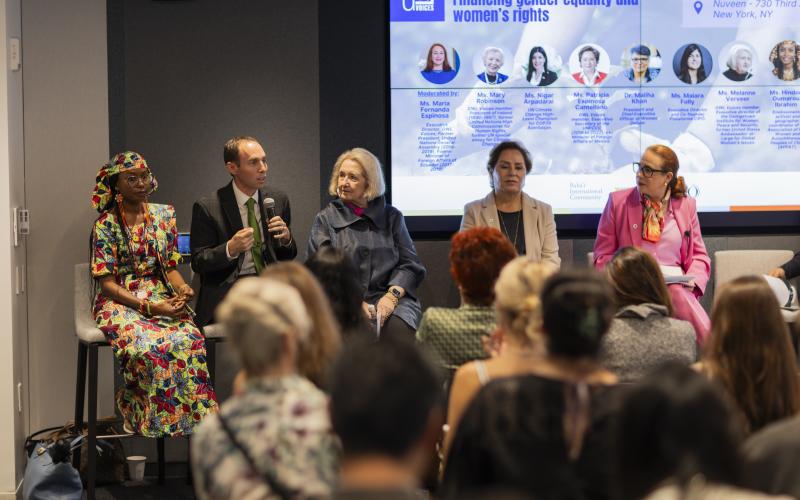
The headlines from the 80th General Assembly largely deal with moments of tension, of conflict, and even farce. Less reported are the undercurrents which may ultimately be more impactful than the waves at the surface, no matter how turbulent they may seem.
In fact, it would seem that this very turmoil is causing us to question and change the underlying assumptions, the undercurrents, of the way things are today. And while ten months ago, by contrast, I was concerned that we weren’t having the necessary conversations, today growing numbers are speaking openly about the profound changes needed to better align governance with the needs of humanity. The Elders came out with a report calling for a fundamental rethinking of the multilateral system. A coalition was launched, Article 109, aiming to use that article of the UN Charter itself to convene a conversation on reform. And long time UN watchers are asking important questions about the forces needed to drive the international order of the future.
Those who are the greatest proponents of international cooperation have long acknowledged its limitations. For 80 years, the United Nations system has been sufficiently effective to stave off change—a victim of just enough success to limit a conversation on alternatives. Yet it is proving, for a host of reasons, unable to achieve the aspirations and responsibilities with which it was founded and endowed. From preventing the scourge of war to ensuring human rights for all and from achieving the Sustainable Development Goals to stemming climate change, challenges old and new require different approaches.
Such shortcomings are not the fault of the United Nations itself. They are the product of deeper assumptions about progress and about the nature of the international order. For example, the assumption that success is solely defined as the pursuit of material wealth, that competition is the best means for advancement, or that power is best understood as dominance. As many have said, what we have today is based on the perceived needs of a 1945 world, not the actual needs of a 2025 world.
But this year, space could be found during the General Assembly for a conversation that, according to the UN Charter, was meant to take place in 1955. Such delay increased the impetus for change with each emerging challenge beyond what was considered in 1945. We now recognize global cooperation as integral to solving the environmental crisis, preventing pandemics, and governing artificial intelligence, not to mention bringing about the peace long aspired for but yet realized. We now have 80 years of lessons learned on which to build.
While it is natural to feel queasy or even terrified of the world on the surface, such discomfort can push us to challenge long-held assumptions lurking beneath. This conversation comes with challenges, but avoiding it may hold still greater risk. And I am optimistic: there is a recognition of the need to act, a commitment to meet the moment, and there are plenty of brilliant people training their minds on the institutions necessary to facilitate a better future for all.
Daniel Perell is a Representative of the Baha’i International Community to the United Nations