View from the Interns: Reflections on the 64th Session of the Commission on Social Development
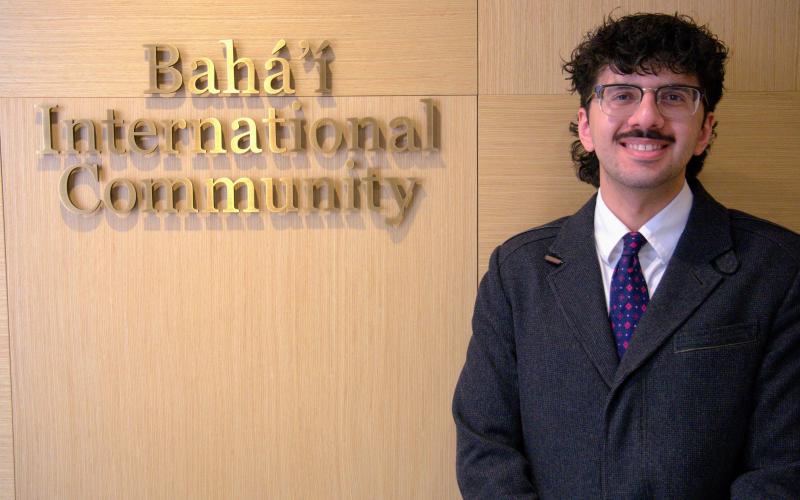
By Rohan Vodjdani
Skipping Class to Change the World: Tensions Between Youth Inclusivity and Schooling Requirements
I was in awe when I stepped into the United Nations Conference Room at the 64th Commission on Social Development (CSocD), which I attended as an intern of the Baha'i International Community. The configuration of the plenary room, with an ocean of tables and seats, all fitted with microphones and translation devices, signalled that CSocD seeks the active participation and collaboration of a diverse range of localized advocates, communities, and governments. To me, this physical arrangement mirrored the participatory ethos of the CSocD priority theme: advancing social development and justice through coordinated, equitable, and inclusive policies. I observed that youth representatives in particular were uniquely positioned to share their experiences on matters that disproportionately affected them: mental health, personal isolation, cybercrime, and AI-facilitated sexual harassment. In this sense, youth possess a reservoir of potential to deepen decision-makers' understanding of contemporary issues and to collaborate with them to address such issues. At the same time, despite this valuable source of insight, I observed tensions between youth participation and their educational responsibilities.
Whether it was at high-level events or panel discussions, youth highlighted the importance of having an intersectional understanding of developmental issues. At one side event, young representatives emphasized that they are not a monolith and that they bring diverse experiences that must inform AI governance broadly. In particular, they called for strategies to legislatively address how AI-facilitated sexual harassment affects youth differently across contexts. On another panel discussion, youth delegates highlighted the challenge of being meaningfully integrated into development processes that are often rigid and top-down in structure.
Through their courage, eloquent articulation, and ability to diagnose the maladies uniquely affecting them today, youth consistently prove themselves to be protagonists of social change. They are not mere beneficiaries of governmental aid, but active participants who voice their concerns. Youth participation and advocacy at CSocD offered a glimpse of their collective power, utilizing their enthusiasm and vitality to ask contemporary questions, learning from the experiences of others, and promoting intergenerational dialogue.
Yet I observed one glaring issue underpinning such vibrant and thoughtful youth participation. NGO groups take months to prepare for the Commission, and CSocD occurred during school hours. One youth shared that they have been skipping school to participate, which has led to a decline in their grades. Moreover, there are significant geographical and immigration constraints for youth when CSocD is routinely held in New York. In hopes of learning and implementing coordinated, equitable, and inclusive policies, youth participation modalities in our current world order conflict with young peoples’ education and geographical realities. Recognizing the distinct contributions youth can make in multilateral processes, how, then, can UN-led events consistently foster active youth participation and collaboration while ensuring their continued intellectual development? How can youth share their local experiences with global actors to foster shared understanding and growth that benefits all?
While I don’t have the answers to these questions, BIC Representative Cecilia Schirmeister offered a perspective during a panel discussion that resonated with me: in thinking of the constraints of youth engagement on the international stage, how can the work of social development itself be reconceptualized? Instead of competing with status quo institutional actors, what would happen if social development were normalized as a bottom-up, grassroots approach—an approach where youth play an active role in discovering and remedying localized troubles, eventually evolving through increased community and institutional involvement. Without conflicting with their education, passionate youth can devote weekends and school-day afternoons to supporting local organizations and projects that are attempting to respond to local problems. Enthusiastic youth could, in fact, be effective leaders in building relationships amongst the community, becoming acutely aware of the localized problems that youth face in their neighborhood.
This reconceptualization could, then, inform how youth are able to meaningfully engage in dialogues on the international stage. Locally, one could explore how nearby schools are responding to youth desires to participate in global forums. Do schools have a coherent policy that recognizes and fosters youth participation in these events without sacrificing their education? I was fortunate to have passionate teachers who kept their classrooms open and fostered a space for continued learning and study after 3:00 pm. How can the sacrifice and service of dedicated teachers be utilized with NGOs to accompany youth, before or after they attend specific Commission events? How can youth contribute to NGO preparation of such events during school hours in a way that acknowledges their efforts through school credits? What role do parents have in bridging this gap between enthusiastic youth and school initiatives? How can we help connect youth laboring at the grassroots with the UN Youth Delegate Programme in a more systematic manner? These are all questions that warrant independent investigation to increase diversity in youth participation.
The youth are a reservoir of potential. They are uniquely positioned to talk about contemporary issues that disproportionately affect them. Once we coherently foster their latent potential alongside their education, locally and globally, a new dimension of knowledge, perspective, and vigor can be introduced into our international discourses.
Rohan Vodjdani is an intern at the Bahá’í International Community United Nations Office in New York.