View from the Interns: Reflections on the 69th Session of the Commission on the Status of Women
By Aadit Rampal
Between Hope and Fear: The Struggle for Women’s/Human Rights
I recently had the privilege of participating in the 69th session of the Commission on the Status of Women (CSW)—an event that, for any feminist or advocate, was a sight to behold. The atmosphere was electric, filled with activists, policymakers, and civil society organizations from across the globe. It was an extraordinary space where history, hope, and human rights converged.
Building from the Enlightenment’s ideals of natural law, to the contemporary recognition that women and men are equal, the Commission on the Status of Women represents the hopes, dreams, and aspirations of women and men worldwide. Its mandate is to review and drive the implementation of the Beijing Declaration and Platform for Action. The Commission’s goal is clear: to overturn the historical subjugation of women so that the patriarchy, which is equally oppressive to men and women alike, is dismantled.
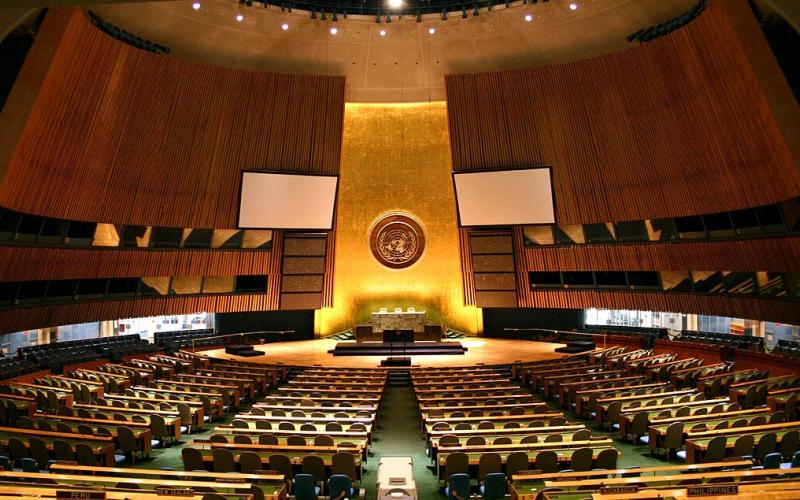
Throughout the Commission, grand and lofty goals were emphasized and reiterated. Representatives of Member States and civil society organizations filled the conference rooms, creating a striking scene—one that, for activists and feminists, was inspiring. Yet, as I sat in these rooms and listened, one thing became painfully clear: there were countless words, statements, and declarations, but words alone do not create change. Many women are still disadvantaged, silenced, and denied freedom and agency. Despite a range of international instruments, including the Universal Declaration of Human Rights, with its most fundamental principle—the "right to be free"—the rights of women have not found full expression. I observed an urgency, a restlessness beneath the speeches—a need to translate rhetoric into action. The fundamental challenge of trusting international institutions lies in a simple truth: actions speak louder than words.
What was preventing this action? The enduring forces of patriarchy and fear. These forces are ancient and systemic, embedded in the very fabric of society, and they are beginning to push back against the hard-won strides made by generations of women. Fear, which manifests in the form of control, has always been patriarchy’s primary weapon—fear of hostility, fear of violence, fear of erasure.
Hope—the ability to translate grassroots action into commitments by international institutions, and vice versa—must then be the antidote to patriarchy. Hope is not a naive outburst or an empty sentiment—it is a powerful resource rooted in history, in movement, in the persistent struggles of women who refused to be silenced. This hope was vividly captured in the stories shared during this year’s NGO CSW orientation and numerous side events. I was particularly moved by the powerful stories of women who worked to establish an inextricable link between women and human rights. These events served as platforms for sharing best practices and fostering collaboration among NGOs working at the grassroots level across the world. And critically, these discussions were part of a broader historical process—one that may seem mundane in the moment but ultimately shapes the course of history. True transformation is rarely dramatic in the moment; it unfolds gradually, through discussions, policies, and persistent advocacy. And in those seemingly ordinary moments, history is written. This is a profound source of hope.
History has shown that the path to freedom and justice is never linear. Progress is met with setbacks, and every step forward faces opposition. But at its core, change is fueled by the hope of billions of women. Every policy, every statement, every political declaration can and must be more than just words. These statements must reflect that they carry the weight of struggle, the resilience of generations, and the unwavering demand for justice. Hope must be leveraged as a tool to turn words into action. The CSW can reflect this hope: the ability to translate grassroots action into commitments by international institutions, and vice versa.
Aadit Rampal is an intern at the Baha’i International Community United Nations Office